What Is Batch Shipping? How to Fulfill Thousands of Orders Faster
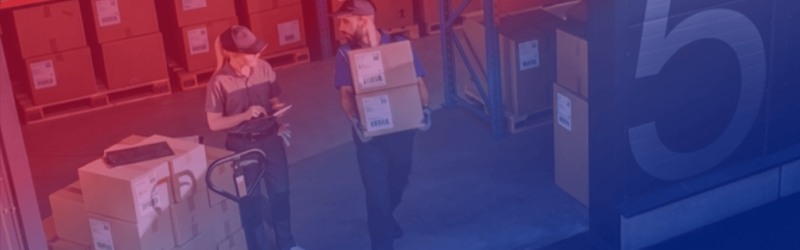
It’s peak season and thousands of orders need to go out by end of day. The team is small but mighty. There are hundreds of really similar orders. Fulfilling each similar order one-by-one is not usually a problem, but that’s when there’s only a couple hundred of orders to ship out by day’s end. Batch shipping is one of the ways warehouse teams can increase shipping capacity during volume spikes without adding headcount.
What Is Batch Shipping?
Batch shipping isn’t a replacement for orders that need to be verified one-by-one or other workflows, but it is an efficient workflow for processing and shipping hundreds of similar orders.
By grouping similar orders, teams can pre-generate all packing slips and shipping labels before a single box is packed. Batches can be built by carrier, weight, SKU count, SKU, fulfillment zone, whether it contains a gift message, or whatever grouping makes the most sense for your orders. Simply put, it makes the floor more efficient and has the potential to increase fulfillment capacity by 4x without adding headcount.
With ShipJunction, lean teams can easily fulfill 3-4 times the number of shipments compared to manual shipping workflows. Multi-carrier shipping solutions should provide easy-to-use batching capabilities,
Batch vs Bulk vs Wave vs Pick-Pack: What’s the Difference?
In the world of fulfillment, terms like batch shipping, bulk shipping, wave picking, and pick-pack-ship are commonly used, and sometimes used interchangeably in pursuit of throughput efficiency. Two primary operational challenges surface: First, how to group orders for efficient picking and packing. Second, how do you select the right carrier and print the correct shipping labels for each package.
Batching is only one workflow for shipping teams, and the focus of this article. Moreover, many of our ShipJunction users use batch for a segment of their most similar orders, while using our one-by-one and Pack-Verify workflows to fulfill the rest of them.
Most warehouses that use batch shipping fall into one of two main workflows: printing packing slips and shipping labels before picking, or they prefer to print shipping labels on demand for each box (after items have been picked and packed).
ShipJunction provides different workflows for each way of shipping, and this article will explain the different customizations and options shippers have to speed up their throughput while optimizing carrier usage and lowering shipping costs.
Pick Pack Ship
This is the baseline where most warehouse operations begin fulfilling orders. A picker picks the items for one order. Boxes are selected, and items are then possibly verified, and finally packed. The boxes are then shipped. Each order is processed one by one. It’s simple and familiar, but at scale, it can become inefficient and time-consuming.
Many teams start here, especially because with lower volumes there is not much need for automation, or the ability to leverage higher volumes for efficiency gains. However, many warehouses outgrow this simple method as sales and volumes grow, and shipping becomes more complex by adding additional carriers and new retail partnerships.
Bulk Shipping
Bulk shipping typically refers to sending a large volume of identical or similar shipments, such as wholesale replenishments, subscription kits, promo packs, or any group of orders for the same set of SKUs. These orders will have the same SKUs and require minimal variation, which makes them easier to process in large runs.
Think: 100 boxes with the same three items, or the same kit. It’s efficient when the orders are the same. This becomes more nuanced when custom messages are required, but can be configured to enable batch shipping. If your shipping solution cannot select the optimal carrier and service level for each individual order in the bulk, you may be shipping at higher costs than you would otherwise need.
Wave Picking
Wave picking is the process of picking multiple orders together. Sometimes, it can help reduce travel time on the floor. While wave picking can be done by FIFO (first-in, first-out) sequencing, it may not be the most efficient. Instead, ShipJunction helps reduce travel time and group multiple orders based on shared characteristics, typically by zone, aisle, pick location, or any other attribute that is meaningful for your operations. This helps workers pull items in batches in less time than individual order pick and pack processes.
It’s common in large DCs and WMS-driven environments and works well when order profiles have shared paths through the warehouse.
Batch Shipping
Batch shipping brings structure to both picking and packing: grouping orders by whatever logic makes sense for the operation. That could be carrier, shipping method, SKU count, order type, and more. The best shipping solutions can automatically match and print gift messages with the right shipping label and packing slip.
Bringing It All Together
| Approach | What It Solves | Where It Typically Breaks |
|---|---|---|
| Pick, Pack, Ship | Simplicity for low volume. Most effective with scan-to-ship capability. | Doesn’t scale. Many clicks per shipment. No automation. |
| Bulk Shipping | High volume, identical shipments. Ideal for subscription-based businesses. | Limited flexibility. Not suited for mixed orders. |
| Wave Picking | Reduces travel time for picking. A process to support different batch and bulk fulfillment workflows. | Disconnect between picking and shipping. Relies on manual matching and reconciliation. |
| Batch Shipping | High-volume, high-accuracy workflows. Ideal for fulfilling orders across different customer types and sales channels. | Requires additional setup and data fields. Once set up, it unlocks major efficiency gains. |
How Batch Shipping Scales Where One-by-One Order Fulfillment Slows Down
One by one fulfillment wasn’t built for today’s complexity—retail partners with custom logic, gift inserts, moving carrier cutoffs, and promo spikes to name a few. Yet most teams still click through one order at a time, repeating actions, wasting precious time, hoping everything aligns with pickup.
Sorting paperwork by hand, sticking the wrong label to the wrong box, or clicking the same buttons over and over for the same types of orders are signs that shipping is struggling with tribal knowledge and is overloaded with too many orders for manual processes. Beyond the inefficiency, it’s all demoralizing for shipping teams. Every mispick or missed scan becomes another time suck.
Stop Playing the Mix-Match Game
Instead of repeating a click-heavy and hard to memorize flow to ship one package, batch shipping consolidates the work: printing an integrated shipping label with slips and labels combined on the same thermal or laser printer. Not only does this speed up the printing flow; you’ll also save time and reduce mistakes by eliminating any manual mix-and-match of labels and packing slips.
How Modern Systems Handle Batch Shipping
Most legacy systems treat batching like a blunt instrument—grouping only by carrier, or the exact same box dimension and weight, or locking teams into fixed workflows that don’t match how the warehouse actually operates. It’s rigid and reactive.
The best modern shipping solutions flip that. Operators can batch any field (or combination of fields) that you need: carrier, brand partner, aisle, bin, zone, license plate, item count, weight range, service level. They even organize orders by gift message requirements, or sort by “placed on” date to clean up aging orders. With ShipJunction, you can also drive batches from Saved Searches in NetSuite.
It’s batching that adapts to your floor, instead of forcing you to change how your business operates. Your shipping system should make your warehouse more efficient, not completely different.
Common ShipJunction Batch Workflows
The Club – Bulk Fulfillment
For teams that need bulk fulfillment, The Club Bulk Fulfillment workflow lets you pre-group orders that have the exact same contents.
- Batch and Print: Choose your batch filters, click print, and ShipJunction processes everything (labels and packing slips) in one motion.
- Flexible or Fixed Batching: Configure ShipJunction to adapt daily or automate repeat batches using saved rules.
- (No) Print Limits: Set order or item caps based on how much your team can handle in one pick run. You can batch as many orders as you want.
- Summarized Pick Sheets: Generate pick lists showing item counts across all orders in a batch.
- Line-Item Grouping: Identify and consolidate orders with identical content to optimize pick and pack.
How it works:
- Orders are pulled in from source of truth, the ERP.
- You select the batching logic.
- Hit print, and the system prints all pick slips and shipping labels together.
- Put packing slips in boxes.
- Apply shipping labels and stage for pickup.
This is ideal for subscription-based fulfillment, where speed, accuracy, and predictable batching drive throughput, like wine clubs, breweries, wholesale floral, and subscription consumer goods.
Batch & Ship
In cases where weights or DIMs aren’t captured in your ERP, use this workflow to pick and pack any number of orders upfront. The box is placed on the scale, and the shipping rules engine automatically selects the right carrier and service with the shipping label printing in less than one second.
- Batch & Ship: Packing slips are printed first; orders are picked in waves, then shipping labels are printed after packing.
- 1-Scan Shipping: Once packed, scan the slip and ShipJunction prints the label instantly.
How it works:
- Print packing slips for batch picking.
- Pick items and pack each order.
- Place box on scale.
- Scan the slip to trigger label generation.
- Label prints instantly using validated ERP/WMS data.
Perfect for teams without weight data in their ERP or those dealing with varied product sizes and dynamic box selection.
Batch Ship & Verify
For high-value items, multi-box shipments, serialized inventory, lot numbered inventory or EDI orders where accuracy is essential; this workflow ensures every item in every box is verified before shipping.
- Full Item-Level Verification: Enforce SKU and quantity checks. Provides thumbnail previews to help packers visually identify items.
- Scan Verification: Pack scans the items and box to ensure the correct dimensions, weight, and box are being used.
- Serialized or Lot Numbered Inventory: When the order contains serialized or lot numbered inventory items, the user is automatically prompted to scan the relevant value for verification.
- Carrier Selection after Verification: Once verified, ShipJunction automatically selects the best-fit carrier according to cost and business rules.
How it works:
- Scan the order to pull up expected items in ShipJunction.
- Scan each item to verify contents match.
- Confirm box details (size, weight) via barcode scan.
- ShipJunction selects carrier and prints the label.
- The shipment is finalized with all validations applied and the order marked ready to fulfill.
This is especially valuable in wholesale and EDI shipping environments where packing errors lead to costly penalties or vendor scorecard hits.
Conclusion: Bath Shipping Isn’t New. Doing It Well Is.
Many warehouses already batch ship in some form. Usually, it begins by manually sorting orders by carrier, printing labels in small runs. As complexity grows, it’s stitched together through a mix of WMS exports, wave picking routines, or manual sorting on the packing line.
The logic is sound. The outcome? Often slower than it should be and can be overly dependent on tribal knowledge and star employees.
Where things break down isn’t the idea of batching, it’s how configurable and adaptable the shipping solution is. If the system is rigid, it creates too many clicks and too many workarounds. There’s a lot of reliance on memory or manual cleanup during packouts.
ShipJunction was built to speed up shipping: not to reinvent how you ship. The ShipJunction batch shipping workflows can make shipping processes more scalable, more flexible, and more aligned with how warehouse teams actually work. Whether that means refining a bulk fulfillment flow, streamlining scan-to-pack, or automating insert logic, the goal is always the same—fewer delays, fewer errors, and faster throughput.
To improve warehouse throughput, don’t start over. Ship with ShipJunction.
Talk to a shipping expert about what’s working, what isn’t, and what a cleaner, faster batch process could look like in your warehouse.