EDI 856 Advance Shipping Notice Guide for Shippers
EDI 856 Advance Shipping Notice
Retailers and distributors receive tremendous shipment volumes to each location every week for inventory replenishment. Large swaths of consumer orders get dropshipped from suppliers. EDI 856 is how they keep track of what stock is coming in, when it will arrive, and which addresses each order is being shipped to.
EDI 856 is the shipment information sent from a supplier to a retailer or distributor. Also called the Advance Shipping Notice, commonly referred to by its abbreviation, the ASN. It provides the receiving company information about the shipment: shipping carrier used, shipment tracking data, package contents, and estimated delivery date.
Retailers use the EDI 856 Advance Shipping Notice to keep their supply chains organized. For suppliers, the stakes are high. If they don’t transmit the information on time and accurately, retailers will apply a chargeback in addition to the typical wholesale prices or referral fees.
What is EDI 856?
EDI 856, or Ship Notice/Manifest, is how suppliers communicate with retailers and distributors about the status of a shipment. It is an electronic document transmitted by a supplier to a buyer after goods have shipped but before they arrive. It communicates the precise contents, packaging structure, and carrier details of a shipment in a standardized machine-readable format.
The EDI 856 Advance Shipping Notice is sent when the shipment leaves the warehouse, and retail partners have very specific requirements about exactly what is included and when it is transmitted.
What do you need to include for EDI 856 transactions?
In simple terms, it needs to include what is in the shipment, how much of each item, the dimensions of the box, what carrier is being used, and when it will be delivered.
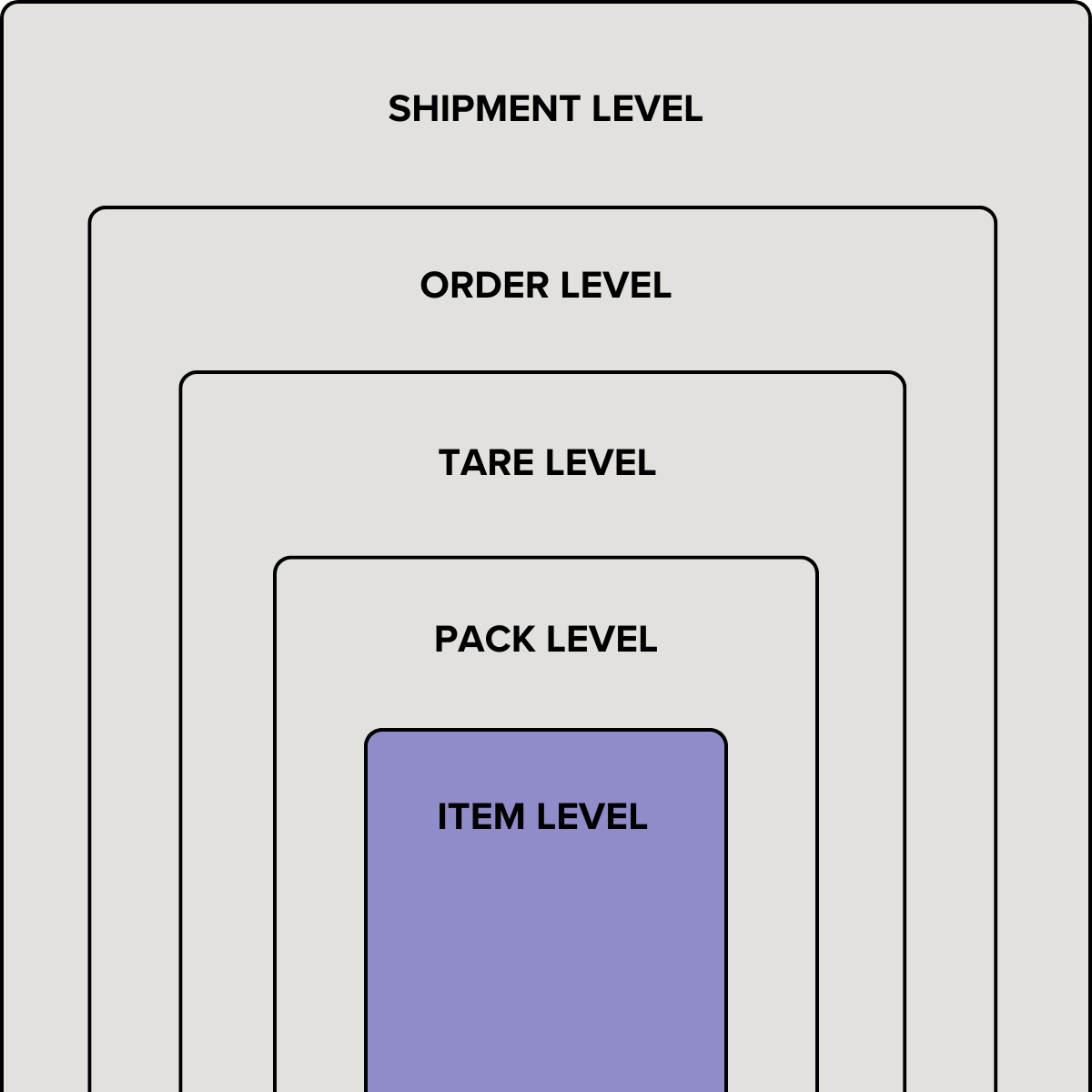
EDI 856 uses nested hierarchical levels (HL) to describe a shipment from the top down, from macro to micro:
| Level | Code | Description |
|---|---|---|
| Shipment | S | Overall shipment details |
| Order | O | Purchase order reference |
| Tare | T | Pallet or outer container |
| Pack | P | Inner carton or case |
| Item | I | Individual SKU/line item |
Common packing structures for EDI 856
While retailers and distributors require ASN transmissions, how those EDI 856 reports are structured will depend on the individual retailer requirements and type of shipment. For every order that requires EDI 856, ShipJunction provides all necessary data required for all Hierarchical Levels to be easily structured by your EDI platform.
- SOPI (Shipment – Order – Pack – Item): most common for retail shipments
- SOTI (Shipment – Order – Tare – Item): most common for pallet shipments
- SOTPI (Shipment – Order – Tare – Pack – Item): common for complex, mixed pallet shipments
- SOI (Shipment – Order – Item): simple, no pack level; most common for drop shipping and small retail shipments
For every order that requires EDI 856, your shipping solution should be able to provide all necessary data required for all Hierarchical Levels to be easily structured by your EDI platform.
Example of Hierarchical Levels
Shipping an order can be straight forward, but following the requirements for EDI 856 transactions can be time consuming, error-prone, and complicated.
Take for instance a hypothetical, simple purchase order from a retail company for 200 hats. The purchase order has multiple line items: 90 green hats, 60 blue hats, and 50 red hats. Each box only fits 100 hats, so you’ll have to ship all the hats in two boxes.
EDI 856 transactions require that the contents of the two boxes be clearly indicated. In this example, the EDI 856 has to indicate that there are 90 green hats and 10 blue hats in box 1. In box 2, there are 50 blue hats and 50 red hats. 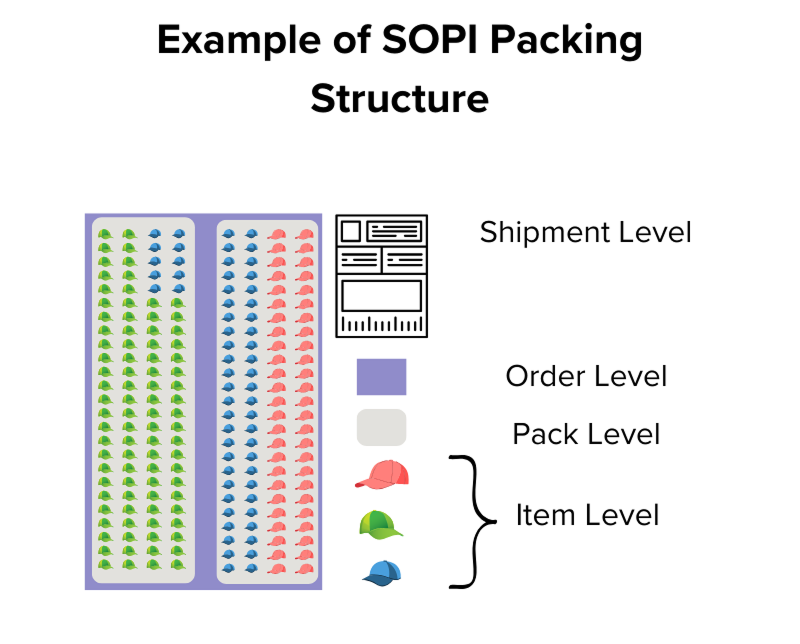
Altogether, the complete shipment has 2 boxes with 200 hats as per the purchase order and the shipment level will provide shipping and delivery info.
Many times, shippers manually key in, or copy-paste, these details into an EDI platform or portal. Using ShipJunction for EDI shipping, all Hierarchical Level data can be encoded into the SSCC barcode while also being sent back to NetSuite or the EDI platform to automate the shipment data for EDI 856.
For Amazon Fulfilled by Merchant and Seller-Fulfilled Prime, ShipJunction can generate and transmit the shipment confirmation for Amazon directly.
Learn more about our Amazon Shipping integration.
What’s included in the shipment level?
The shipment level data typically includes:
- Shipping carrier
- Delivery date
- BOL Number if freight shipment
- PRO Number if freight shipment
- Tracking Number
- Standard Carrier Alpha Code (SCAC) codes
- and any other information required by the retailer receiving the goods
Why retailers require the EDI 856 (and what happens if you get it wrong)
Virtually every large-scale retailer and distributor has EDI 856 requirements written directly into their vendor compliance guidelines. From Amazon to Costco, AutoZone to CVS and more, retailers actively enforce EDI 856 because their own supply chains and operations depend on it.
Common reasons for EDI 856 chargebacks
- Late or missing ASN: If the ASN doesn’t arrive within the retailer’s required window, or doesn’t arrive at all, the chargeback is automatic regardless of whether the physical shipment was accurate.
- GS1-128 label mismatch: Every carton and pallet in a retail shipment carries a GS1 (also referred to as UCC-128) compliance label that is in the retailer’s prescribed format and contains a unique serial shipping container code (SSCC). The retailer’s receiving system scans that label and looks for a matching record in the ASN. If the label or the ASN data are incorrect, the scan will fail. The shipment gets flagged, and the supplier gets charged back for the discrepancy.
- Quantity and item discrepancies: If the ASN states that a box contains 90 units of a particular SKU and the physical count shows something different, that’s a chargeback event. The same applies at the order level; if the ASN reflects quantities that don’t match the purchase order or what was really shipped, there is rework and reconciliation afterwards, sinking more labor and man hours into the order.
- Incorrect or missing data elements: Every retailer is different. Some retailers require specific fields in the ASN that others don’t. Common data elements that can be required include carrier SCAC codes, department numbers, store routing codes, or specific packaging hierarchy levels. A supplier sending a technically valid 856 that’s missing a required field for a particular trading partner will still face a compliance violation.
Avoid chargebacks from EDI 856 orders
EDI 856 compliance comes down to one thing: getting the right data to your retail partners at the right time, every time. When that process depends on manual data entry, copy-pasting between systems, or end-of-day batch submissions, avoidable errors result in chargebacks that eat away at margins.
ShipJunction removes risk by generating all hierarchical level data at the time of shipment, encoding it into the SSCC barcode, and transmitting it back to your EDI platform or NetSuite instantly. We ensure your Advance Shipping Notice is accurate, complete, and transmitted on time.
Whether you’re shipping retail replenishment orders, mixed-pallet freight, or drop ship orders, ShipJunction’s EDI-optimized shipping system to ship EDI orders without the headaches or margin-zapping chargebacks that can slow throughput and stall growth.
Discover how other manufacturers and retail shippers eliminate chargebacks from EDI 856 errors while improving throughput and shipping accuracy. Book a demo today!